
Becoming a Private Pilot
Updated: Jan 13, 2024
If you’re here, hopefully, that means you’ve caught the aviation bug like the rest of us. Whether you want to do this professionally or just for fun, we all start somewhere. Welcome to the world of aviation, and from a group of people who have been where you are, here are some steps to help you get started on your pilot pathway. - @okstatewai, Home of the Flying Cowgirls
What’s a Private Pilot?
A certificated Private Pilot is legally certified to fly aircraft. Not just any airliner, though. Usually, small Single-Engine Land aircraft like a Cessna 172, Piper Warrior, or Beechcraft Bonanza, just to name a few. A private pilot is trained in aircraft operations, aircraft maneuvers, navigation and cross-country flight planning, and emergency procedures. For more information on Private Pilots, a great article by ATP can be found here.

Becoming a Student Pilot
A Student Pilot's License is like your legal license to learn. You need your SPL to fly solo, but it is not required to take flight lessons, or even a discovery flight. You are considered a student pilot up to the point of passing your private pilot checkride.
A discovery flight, or introductory flight, serves the purpose of introducing flying to a prospective student. Turns, climbs, descents; it’s low stress, casual, and a flight instructor will let you hold the controls. This is highly recommended so you know if you genuinely want to pursue flight training.
Here are the eligibility requirements for getting a SPL:
At least 16 years old
Read, speak and understand English
From here, you’ll have to complete an application through the Integrated Airman Certification and Rating Application (IACRA) website (your flight instructor will help you with this). Expect it to take three weeks before your SPL comes in. Most answers to Student Pilot’s License FAQs can be found on the FAA website.
To continue your flight training, you'll also need a current medical certificate. This is a different document than your SPL.
Medical Certificate
Aviation Medical Examiners (AME) issue aviation medical certificates. AME’s are physicians with a special interest in aviation medicine and aeromedical factors. These exams cost anywhere from $70-$200. A list of AME’s in your area can be found on the FAA website.
You will need your medical certificate if you want to pursue flight training. Potentially disqualifiable conditions are listed in 14 CFR Part 67. But always remember, where there’s a will, there’s a waiver.
Finding a Flight School
The next question you might be asking is where to go for flight training. There are two predominant options: a public flight school, or a collegiate aviation program. A public flight school is similar to what experience you may have had with public driver’s education. You call the school and ask for clarification on getting started as a student pilot, schedule a time to tour the facility or for a discovery flight, and from there you begin your journey to enroll in a flight training program.
Collegiate aviation programs, such as the one here at Oklahoma State University, are typically structured training programs aligned with the aerospace curriculum of the respective Bachelor's Degree offered at that university. Similarly to how a physics major would have physics lectures and then their physics labs, collegiate aviation programs have lectures qualifying as FAA-approved ground training, and “labs” are flight lessons at the city or university airport.
Part 61 or Part 141?
Part 61 and Part 141 are the two options of the type of flight training you can receive. Part 61 allows for a more flexible schedule, customizable training syllabus, and can be more expensive. Part 141 is a more regimented and structured curriculum, and efficient for full-time students. Typically, both Part 61 and Part 141 training options are available at public flight schools, while collegiate aviation programs traditionally follow a Part 141 training syllabus. Each training route has their pros and cons, and a great article by Pilot Institute points out what to consider before deciding what’s right for you.
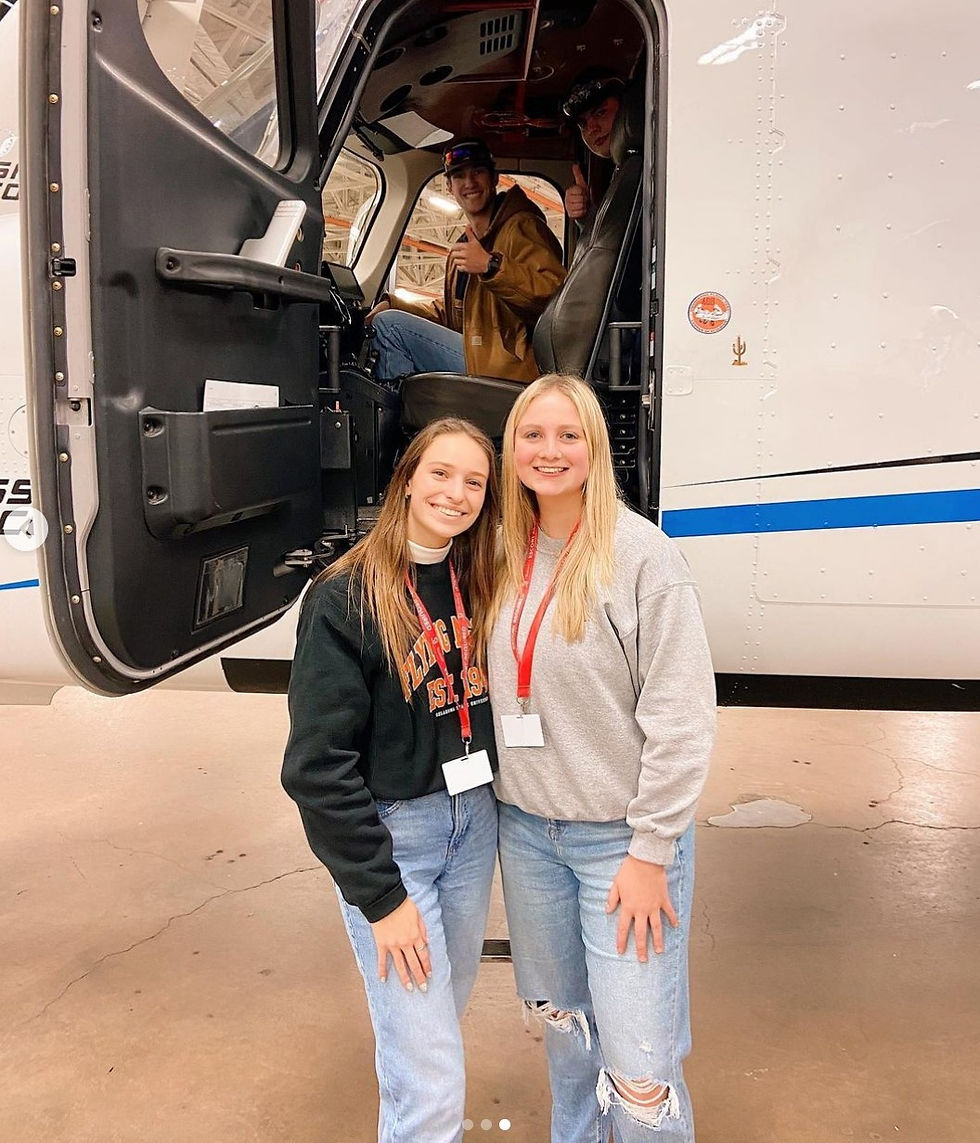
The Progression of Flight Training
Simply put, the progression of flight training comes down to money and motivation. The work you put in is what you will get out. Although it is important to find a CFI, Certified Flight Instructor, who is good for you, it comes down to how much you are willing to study.
The first milestone you reach in your student pilot career is your initial solo flight, where you start the plane, takeoff, stay in the traffic pattern of the airport, and land - all by yourself. After this phase, comes cross-country and more thorough navigation training to get you prepared for your checkride. Your checkride consists of two phases: ground and flight. The ground, otherwise known as your oral exam, is when the DPE, Designated Pilot Examiner, asks questions involving applied knowledge and critical thinking. Prior to your checkride, the required Private Pilot Written Exam must be passed. A minimum of 70% is needed, but a score of 85% or higher is a good rule-of-thumb, so your checkride goes smoothly. The flight portion is an accumulative evaluation on what your CFI has prepared you to do. The ACS, Airman Certification Standards, is what DPEs use to conduct a checkride.
The Cost of Flight Training
Numerous factors impact the price of pilot training. Aircraft type, instructor costs, ground lesson costs, fuel costs, and location all factor into what you may end up paying for flight school. As mentioned before, money and motivation are the two things largely driving the progression of flight training. Loans, government grants, and scholarships are financial aids commonly used by student pilots. Have the expectation that acquiring a Private Pilot’s License costs anywhere from $8,000-$14,000. Additionally, training can take anywhere from 4-18 months, though everyone has their own pace. An important note, however, is that the longer you wait between training lessons, while saving you money short-term, may not save you money long-term if you need to pay for flights or ground lessons to review what may be forgotten over time.
Getting Involved in the Aviation Industry
Sounds exhausting - but look at the bright side. There is a whole world of aviation enthusiasts out there to help you progress in your journey and that share the same fiery passion of flight. You are not alone. Becoming a member of aviation clubs and organizations like the Experimental Aircraft Association, Women in Aviation International, The Ninety-Nines, AOPA will help you learn about all different facets of aviation. The aviation industry is smaller than you may think - and you never know who you may want a letter of recommendation from or who you will work for. Additionally, many of these organizations host opportunities for scholarships and discounted training. While these are not all of the available organizations you can involve yourself in, it’s a good starting point.
If you’re passionate about aviation, pursue it. The best part of this industry is that everyone loves what they do - it’s not just work. Take a leap of faith to explore what you want, because it might be the best decision you ever make.
Mags Off,
Flying Cowgirls
Written By: Dana Friend


Comments